


Why Spectrophotometer Maintenance Is Important
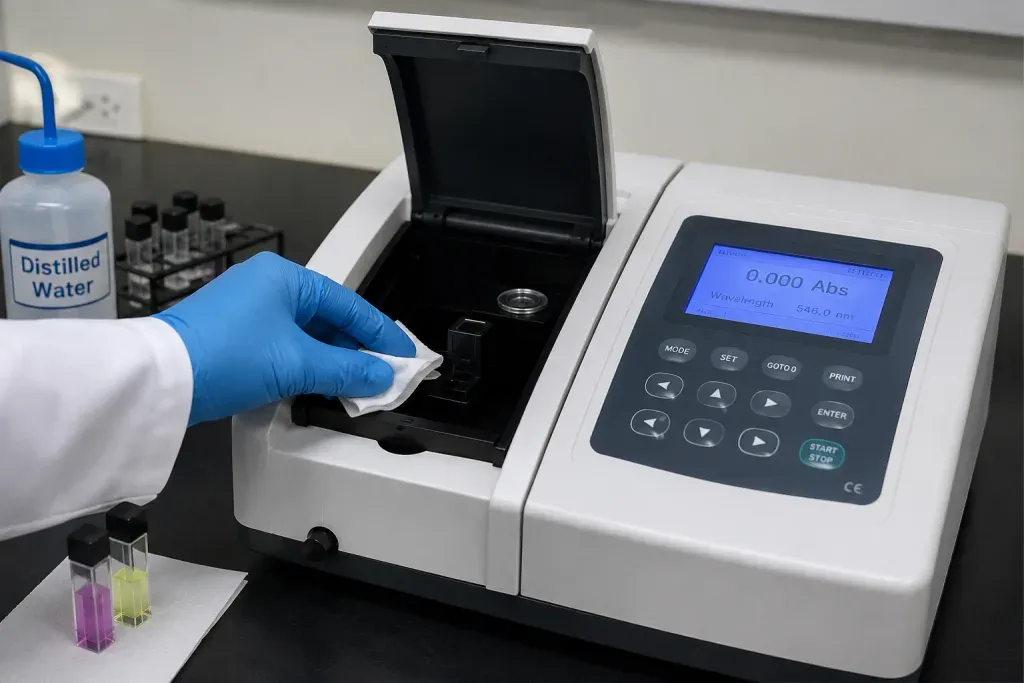
Even a minor issue within the optical or electronic system can impact measurement results. Poor maintenance may lead to:
- Inaccurate absorbance readings
- Wavelength calibration errors
- Baseline instability
- Increased instrument noise
- Reduced lamp performance
- Unexpected equipment breakdowns
- Failed quality audits
Regular maintenance helps laboratories maintain data integrity, comply with quality standards, and improve operational efficiency.
Understanding the Critical Components of a Spectrophotometer
Before discussing maintenance procedures, it is important to understand the key components that require regular attention.
Light Source
Most UV-Visible spectrophotometers use:
- Deuterium lamps for UV measurements
- Tungsten-halogen lamps for visible measurements
The lamp is responsible for producing stable light energy required for accurate analysis.
Optical System
The optical system typically includes:
- Mirrors
- Lenses
- Monochromator
- Diffraction grating
- Slits
Any contamination or misalignment can affect wavelength accuracy and measurement precision.
Detector
The detector converts light into electrical signals. A properly functioning detector is essential for obtaining consistent analytical results.
Electronic Circuits
Electronic boards control instrument functions, signal processing, display operations, and communication with software systems.
Daily Spectrophotometer Maintenance
Daily maintenance requires only a few minutes but significantly reduces the risk of future problems.
Clean the Sample Compartment
Dust, chemical residues, and sample spills can accumulate inside the sample chamber. Regular cleaning helps prevent contamination and measurement errors.
Inspect Cuvettes
Dirty or scratched cuvettes can affect absorbance readings. Always inspect and clean cuvettes before use.
Verify Instrument Startup
Observe the instrument during startup and check for:
- Error messages
- Unusual noises
- Lamp warnings
- Communication issues
Early detection often prevents larger problems later.
Monitor Baseline Stability
A stable baseline indicates that the optical and electronic systems are functioning correctly. Significant fluctuations may indicate the need for service.
Weekly Maintenance Procedures
Weekly maintenance focuses on performance verification and environmental control.
Check Optical Surfaces
Inspect accessible optical components for dust or contamination. Only use approved cleaning materials recommended by the manufacturer.
Verify Wavelength Accuracy
Many laboratories perform periodic checks using certified standards to confirm wavelength accuracy.
Review Instrument Logs
Modern spectrophotometers often record operational errors and warnings. Reviewing these logs can help identify developing issues before they become serious.
Inspect Ventilation Areas
Blocked air vents can cause overheating and reduce the lifespan of electronic components.
Monthly Maintenance Activities
Monthly inspections help ensure long-term instrument reliability.
Lamp Performance Evaluation
Monitor lamp intensity and operating hours. Aging lamps may still function but can cause unstable measurements.
Mechanical Inspection
Check moving components such as:
- Sample holders
- Monochromator drives
- Mechanical assemblies
Smooth operation is essential for accurate measurements.
Software Verification
Confirm that software functions properly and communication between the instrument and computer remains stable.
Annual Preventive Maintenance
Annual preventive maintenance should be performed by qualified service engineers.
Typical activities include:
Optical System Cleaning
Professional cleaning removes contamination that may not be visible during routine inspections.
Optical Alignment
Alignment checks ensure proper light transmission through the optical path.
Lamp Evaluation and Replacement
Engineers assess lamp condition and replace lamps that are approaching the end of their service life.
Detector Testing
Detector performance is verified to ensure signal accuracy and sensitivity.
Electronic Diagnostics
Power supplies, control boards, and communication circuits are tested for proper operation.
Performance Verification
The instrument undergoes comprehensive testing for:
- Wavelength accuracy
- Photometric accuracy
- Resolution
- Repeatability
- Stray light performance
Common Maintenance Mistakes to Avoid
Many instrument failures occur due to improper handling rather than normal wear.
Avoid the following mistakes:
- Touching optical surfaces with bare hands
- Using non-approved cleaning chemicals
- Ignoring calibration warnings
- Operating in dusty environments
- Blocking ventilation openings
- Delaying lamp replacement
- Skipping preventive maintenance schedules
Proper care significantly reduces the likelihood of costly repairs.
Environmental Factors That Affect Performance
Spectrophotometers are sensitive analytical instruments and should operate in a controlled environment.
Recommended conditions include:
- Stable room temperature
- Low humidity
- Dust-free surroundings
- Vibration-free installation
- Stable electrical power supply
Poor environmental conditions can accelerate component wear and affect measurement reliability.
Benefits of Regular Spectrophotometer Maintenance
Laboratories that follow a structured maintenance program experience several advantages.
Improved Measurement Accuracy
Routine maintenance ensures reliable analytical results and reduces measurement uncertainty.
Reduced Downtime
Early detection of potential issues helps prevent unexpected equipment failures.
Longer Equipment Lifespan
Regular servicing protects critical components and maximizes return on investment.
Lower Repair Costs
Preventive maintenance often identifies small issues before they develop into expensive repairs.
Better Regulatory Compliance
Maintained instruments support GMP, GLP, ISO, and other quality management requirements.
When Maintenance Is No Longer Enough
Although maintenance helps prevent many issues, some problems require professional repair.
Consider contacting a service engineer if you observe:
- Persistent calibration failures
- Wavelength errors
- Excessive baseline drift
- Detector faults
- Lamp ignition problems
- Software communication failures
- Frequent instrument shutdowns
Timely repair helps restore performance before major damage occurs.